Jaipur’s landscape is dotted with jaw-dropping structures that showcase a brilliant blend of Rajput and Mughal architecture:
Hawa Mahal (Palace of Winds): The iconic, five-story pink sandstone facade featuring 953 small casements (jharokhas), designed to allow royal women to observe street festivals without being seen.
Amer Fort: A colossal, honey-colored fortress perched high on the Aravalli hills, famous for its grand ramparts, cobblestone paths, and the stunning Sheesh Mahal (Mirror Palace), where a single candle illuminates the entire hall through thousands of tiny mirrors.
The City Palace & Jantar Mantar: Right in the heart of the old city sits the grand home of the royal family, located directly across from the world’s largest stone astronomical observatory—a UNESCO World Heritage Site featuring a sun dial that tells time accurate to two seconds.
A Haven for Food & Craft
Jaipur is an absolute paradise for food lovers and collectors, renowned worldwide for its rich heritage arts:
The Culinary Standard: The local food is legendary, anchored by the iconic Pyaaz Kachori (crisp, flaky pastry stuffed with a spicy onion filling) and rich sweets like Ghevar (a honeycomb-shaped festive dessert soaked in sugar syrup), alongside fine dining options serving authentic royal Rajasthani thalis.
Artisanal Hubs: The bustling bazaars—like Johari Bazaar and Bapu Bazaar—are alive with the shimmer of exquisite gemstone cutting, fine Meenakari jewelry, vibrant Bandhani textiles, and the globally celebrated art of hand-block printing from nearby Sanganer.
Jaipur is a city where history isn’t tucked away in a museum—it forms the colorful, bustling backdrop of everyday life.
Ready to map out your visit? Whether you want a perfectly timed route to beat the crowds at Amer Fort, the ultimate street food trail through the walled city, or a guide to the best block-printing workshops, let me know what you’d like to explore next
Jaipur—the legendary Pink City—is the vibrant capital of Rajasthan, where the opulence of India's royal past perfectly meets the energy of a bustling modern metropolis. Founded in 1727 by Maharaja Sawai Jai Singh II, it stands as India’s first planned city, built on the principles of ancient Hindu architecture and laid out in a precise, harmonious grid.
The city earned its famous moniker in 1876, when the entire old quarter was painted a warm terracotta pink to welcome Britain's Prince of Wales—a historic hue that is still strictly maintained by law today.
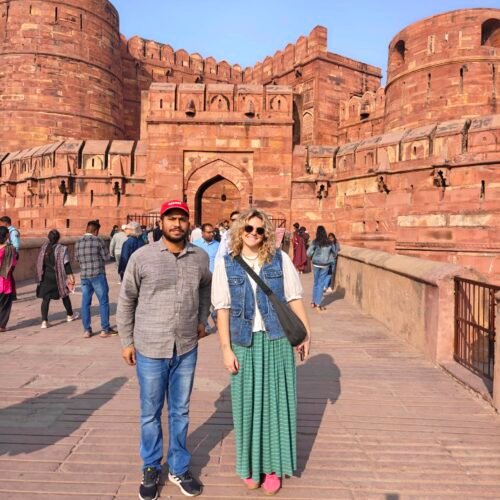
Experience India’s iconic 3-day Golden Triangle tour covering Delhi's historic monuments, sunrise at the Taj Mahal, Agra Fort, and Jaipur’s Amber Fort and City Palace.
Travel is the movement of people between relatively distant geographical locations, and can involve travel by foot, bicycle, automobile, train, boat, bus, airplane, or other...